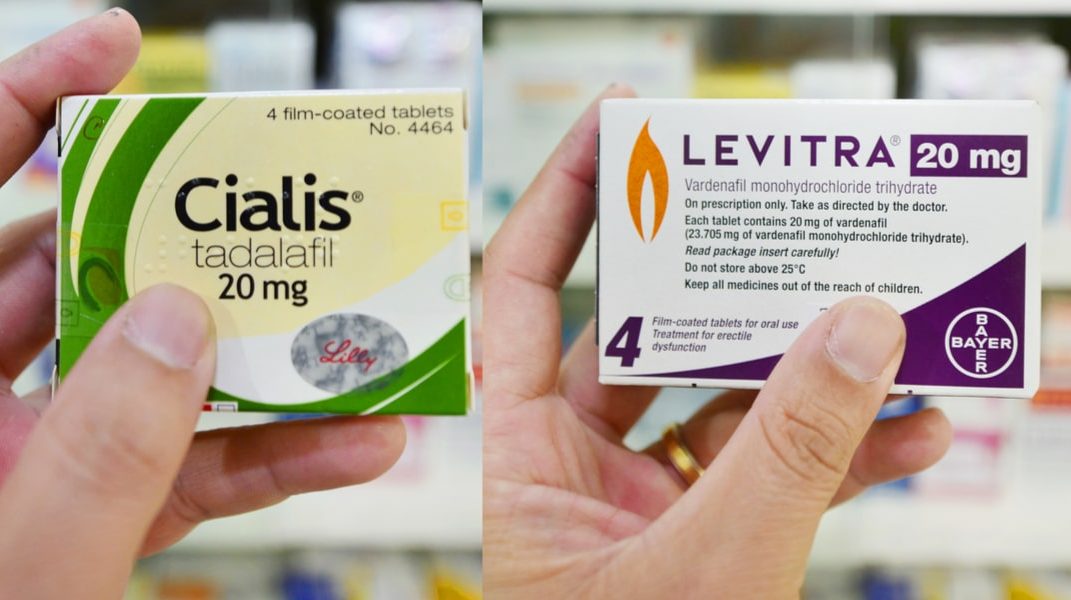
Levitra (vardenafil) and Cialis (tadalafil) both treat erectile dysfunction, but they fit different routines. In a Levitra vs Cialis comparison, the clearest difference is duration: vardenafil is usually shorter-acting and used as needed, while tadalafil lasts longer and may be used as needed or daily. That matters because timing affects meals, planning, benign prostatic hyperplasia (BPH), side effects, and interaction risk.
Neither medicine creates sexual desire or works without sexual stimulation. Neither is automatically stronger or safer for everyone. The better fit depends on your health history, other medicines, and what kind of flexibility you need.
Key Takeaways
- Same class – Both are phosphodiesterase type 5 (PDE5) inhibitors for ED.
- Main difference – Tadalafil usually lasts much longer than vardenafil.
- Use pattern – Tadalafil may be daily or as needed; vardenafil is usually as needed.
- Food effect – Heavy, high-fat meals may delay vardenafil more than tadalafil.
- Safety first – Nitrates, alpha blockers, heart history, and some antibiotics or antifungals can change the choice.
Levitra vs Cialis at a Glance
The practical difference is time: vardenafil usually supports a planned window, while tadalafil offers a longer period of possible response. Both improve blood flow to the penis during arousal, but they do not work like an instant switch.
| Comparison point | Levitra / vardenafil | Cialis / tadalafil |
|---|---|---|
| Drug class | PDE5 inhibitor | PDE5 inhibitor |
| Main use | Erectile dysfunction | Erectile dysfunction; also used in some people with BPH |
| Common use pattern | Usually as needed | As needed or daily, depending on the treatment plan |
| Typical onset | Often around 30 to 60 minutes | May start in about 30 minutes for some people, though response varies |
| Typical duration | Often about 4 to 6 hours | May remain active up to 36 hours |
| Food effect | Heavy or high-fat meals may slow onset | Food usually has less effect |
| Practical fit | More tied to a planned time | Often chosen when flexibility is important |
When readers compare Levitra vs Cialis for duration, tadalafil usually stands out. A longer window does not mean a continuous erection. It means the medicine may remain active longer, so arousal can lead to a response over a wider time frame.
Why it matters: The best choice is often about fit and safety, not just speed.
How Timing, Meals, and Daily Use Change the Experience
Timing changes how much pressure someone feels around sexual activity. A shorter-acting ED medicine can work well for a planned evening, while a longer-acting option can reduce the need to schedule intimacy around a narrow window.
Onset and duration
Both medicines need time to be absorbed. Vardenafil is commonly discussed as an as-needed medicine taken before anticipated sexual activity. Tadalafil can also be used that way, but its longer half-life gives it a wider period of effect.
That is why Levitra vs Cialis which is better is not a one-size question. Some people value a shorter, more defined window. Others prefer tadalafil because it allows more room for spontaneity. Response can also vary with age, diabetes, blood pressure, anxiety, alcohol use, and other medicines.
Food and alcohol
Food matters more with vardenafil. A heavy or high-fat meal may delay how quickly it starts working. Tadalafil is generally less affected by meals, which can make it easier to fit around dinner or travel.
Alcohol deserves its own caution. Heavy drinking can worsen dizziness, flushing, headache, and low blood pressure symptoms with either drug. It can also make erections harder to achieve, even when the medication is otherwise appropriate.
Daily tadalafil versus as-needed vardenafil
Tadalafil has a daily-use option for some treatment plans. That changes the goal from timing a pill before sex to maintaining a steady routine. Daily use may be discussed when ED is frequent, when timing feels stressful, or when urinary symptoms from BPH are also part of the picture.
Vardenafil is usually considered an as-needed option. That may suit people who have sex less often, prefer not to take a daily medicine, or want a treatment linked to a specific planned time. These are preference and safety discussions, not proof that one medicine is universally better.
Which Option May Fit Which Situation?
The right comparison starts with the problem you are trying to solve. ED alone, ED plus urinary symptoms, medication interactions, and heart health can all point the discussion in different directions.
If ED is the only issue and you are comfortable planning ahead, vardenafil may be part of the conversation. If you want a longer response window or less focus on exact timing, tadalafil often comes up first. If BPH symptoms such as frequent urination, urgency, or weak stream are also present, tadalafil may be discussed because it has an established role in that setting.
Age alone does not decide the answer. There is no single best ED pill for a 70-year-old man, a 50-year-old man, or any other age group. Older adults are simply more likely to have factors that require closer review, such as heart disease, kidney or liver problems, prostate medicines, blood pressure treatment, or multiple prescriptions.
For broader browsing, the Sexual Health Hub covers related sexual-health topics, while the Urology Hub is useful when urinary symptoms are also involved. The Men’s Health Hub can help place ED in the wider context of cardiovascular and metabolic health.
Safety, Side Effects, and Interaction Risks
The safest Levitra vs Cialis choice depends on your medical history and medication list. Both drugs can be appropriate for many adults, but both can be risky in the wrong situation.
Common side effects
Many side effects come from blood vessel relaxation. They are often mild, but they can still affect comfort and adherence. Commonly discussed effects include:
- Headache – A frequent PDE5 inhibitor effect.
- Flushing – Warmth or redness in the face or chest.
- Nasal congestion – A stuffy or runny nose.
- Indigestion – Upset stomach or reflux symptoms.
- Dizziness – More concerning if blood pressure is low.
- Back or muscle aches – More often noted with tadalafil.
Side effects do not always predict benefit. A person can have side effects without a good erection response, or a good response with few symptoms. That is one reason follow-up matters after starting or changing ED treatment.
Interactions that need extra caution
Medication interactions are one of the most important parts of any ED medication comparison. A full medication list should include prescriptions, over-the-counter medicines, supplements, and recreational substances.
- Nitrates – Combining nitrates for chest pain with PDE5 inhibitors can cause a dangerous blood pressure drop.
- Riociguat – Some pulmonary hypertension medicines can also create unsafe blood pressure effects.
- Alpha blockers – Prostate or blood pressure medicines may increase dizziness or fainting risk.
- Strong CYP3A4 inhibitors – Certain antifungals, antibiotics, and HIV medicines can raise drug levels.
- Heart-rhythm concerns – Vardenafil has extra cautions around QT prolongation, a heart-rhythm issue measured on an ECG.
- Kidney or liver disease – Reduced drug clearance can affect tolerability and safety review.
Because tadalafil stays active longer, clinicians also consider what might happen if chest pain or another urgent heart symptom occurs after use. This does not make tadalafil unsafe by itself. It means emergency and cardiovascular context matters.
Quick tip: Bring a complete medication list to any ED discussion, including heart and prostate medicines.
Seek urgent medical care for chest pain, severe fainting, sudden vision or hearing changes, or an erection lasting more than four hours. These symptoms go beyond routine side effects and should not be watched at home.
How Other ED Medicines Fit the Comparison
Vardenafil and tadalafil are not the only PDE5 inhibitors. Sildenafil, the active drug in Viagra, is another common as-needed option. It is often discussed alongside vardenafil because both are shorter-acting than tadalafil and may require more planning around meals and timing.
Adding another option does not remove the same safety rules. Nitrates, unstable heart symptoms, low blood pressure, alpha blockers, and strong interaction medicines still matter. The practical question is not simply which pill is strongest. It is which medicine fits the person, the relationship context, the medication list, and the follow-up plan.
ED can also be an early clue to vascular or metabolic health problems. Blood pressure, diabetes, sleep quality, smoking history, stress, and circulation can all shape sexual function. Medication may be one part of care, but it should not replace a broader health review when symptoms are new, worsening, or linked with chest pain or exertional shortness of breath.
Why Brand Availability Can Be Confusing
Many people ask why Levitra is harder to find under its brand name. Brand availability can change by country, manufacturer, market demand, and generic competition. That does not always mean the active drug has disappeared everywhere. It often means vardenafil may be discussed by its generic name rather than by the original brand.
This is why many current comparisons are really vardenafil versus tadalafil. If a prescriber uses generic names, the key questions stay the same: onset, duration, food effect, side effects, interactions, and whether BPH symptoms should influence the choice.
For access context, BorderFreeHealth connects eligible patients with licensed Canadian partner pharmacies. When required, prescription details are checked with the prescriber before pharmacy dispensing. Some patients without insurance use cash-pay cross-border options, subject to eligibility and jurisdiction.
Category pages can help with navigation, but they are not a substitute for clinical review. The Men’s Health Collection and Urology Collection group related product pages for browsing.
Questions to Bring to a Prescriber
A useful Levitra vs Cialis discussion is specific. The more complete your history, the easier it is to compare options safely and avoid a poor fit.
- Treatment goal – ED alone, or ED plus urinary symptoms.
- Timing preference – Planned use or a more flexible window.
- Meal pattern – Whether heavy dinners are common before sex.
- Medication list – Nitrates, alpha blockers, heart medicines, antibiotics, antifungals, or HIV medicines.
- Heart history – Chest pain, fainting, rhythm problems, or major blood pressure swings.
- Side-effect tolerance – Headache, congestion, indigestion, dizziness, back pain, or muscle aches.
- Follow-up plan – When benefits, side effects, and ongoing fit will be reviewed.
It is also worth asking what to do if the first choice does not work well. ED medication response can depend on timing, stimulation, food, alcohol, stress, and underlying health. A careful follow-up can prevent people from giving up too early or trying unsafe combinations.
Authoritative Sources
- NIDDK overview of erectile dysfunction
- NHS tadalafil medicine information
- DailyMed vardenafil labeling
In most comparisons, tadalafil offers the longer window and a daily-use option, while vardenafil is more tied to planned, as-needed use. Safety still drives the decision, especially when heart medicines, prostate medicines, low blood pressure, BPH symptoms, or rhythm concerns are involved.
This content is for informational purposes only and is not a substitute for professional medical advice.